
MakeShift 2026: Watch the conversations on accountable tech by design
MakeShift 2026 brought designers, technologists, researchers, and advocates to New York City to explore how digital systems should be designed and governed. Watch the highlights and two of the event's deepest conversations.
July 14, 2026
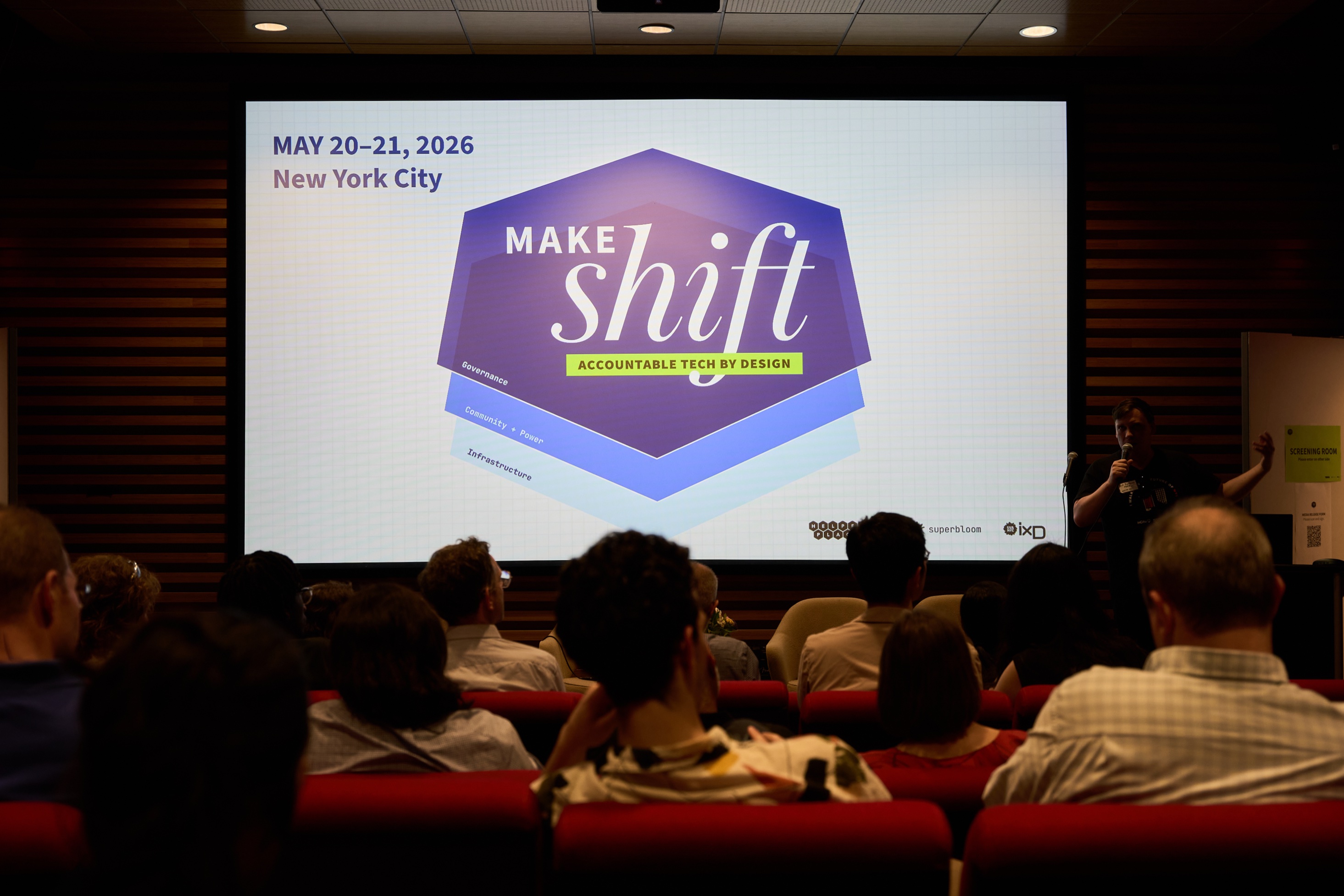
On May 20 and 21, 2026, MakeShift convened designers, technologists, researchers, and advocates in New York City for two days on a single question: how should the digital systems that increasingly shape public life be designed and governed? Organized by Helpful Places and Superbloom, this inaugural conference gathered a community around the theme of accountable tech by design. It examined the intersection of design, technology, and power, and the work of building DTPR as a community-driven, open-source standard for AI transparency.
The conversations spanned three threads: digital trust as public infrastructure, accountability as a design practice, and power and participation. We recorded some of the best moments so that those who couldn't join in person can follow along. Below are three videos: a short teaser to set the scene, followed by two longer conversations that go deep on the ideas at the heart of the event.
A first look
This short highlights reel captures the energy of the two days, from the workshops and roundtables to the design exhibition and the people who made MakeShift what it was.
From tools to civic infrastructure
The first of our two feature conversations asks what it takes to move from one-off tools toward genuine civic infrastructure, and why community expertise has to sit at the center of that shift. The panel digs into how accountable AI depends on centering the knowledge of the people these systems are actually deployed on, rather than treating accountability as an afterthought layered on top of finished products.
Soft infrastructures and undesigning design
The second conversation turns the lens on design itself. What are the "soft infrastructures" that hold technology accountable, the norms, relationships, and practices that surround the tools? And what does it mean to undesign design, to step back from the assumption that more design is always the answer and redistribute power back to communities? It's a thoughtful, provocative discussion about the responsibilities that come with shaping the systems people live inside.
MakeShift was only the beginning of these conversations. If the ideas here resonate, there are ways to keep going and to get involved in the work.
Explore the DTPR standard
DTPR is a community-driven, open-source communication standard for making the technology in our shared spaces, and the AI behind it, understandable to everyone.
Stay close to the work
Subscribe to hear about future MakeShift gatherings, new DTPR tools and case studies, and how to get involved in building accountable tech.